

Indiana Nears Historic Sweepstakes Casino Ban
Indiana’s legislature is on the brink of adopting one of the strictest statutory bans on sweepstakes-style online casinos in the country after lawmakers refined the language of House Bill 1052 and advanced it through both chambers, with likely final votes imminent.
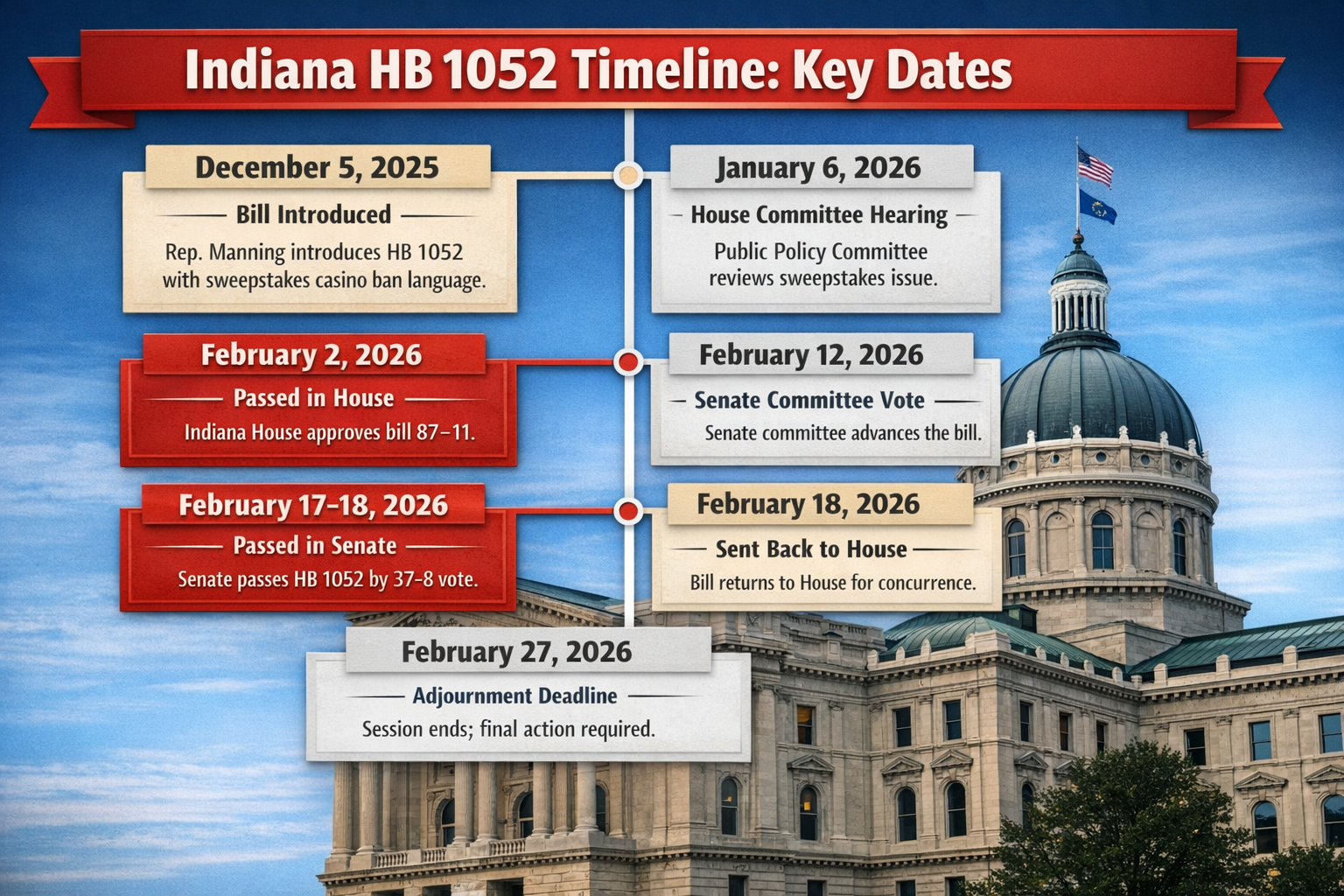
The sweeping bill, originally introduced in December 2025, gained early attention for its broad gaming-related provisions and, more notably, its effort to define and prohibit online sweepstakes games that use dual- or multi-currency payment systems. Since then, HB 1052 has moved through multiple procedural milestones and now awaits a final decision before the February 27, 2026, adjournment.
- Image

HB 1052 From Introduction to House Passage
Rep. Ethan Manning filed HB 1052 on December 5, 2025, embedding sweepstakes-casino language in a broader administrative bill that also touches horse racing, alcohol, and tobacco-related regulatory matters. The sweepstakes language clarified that online platforms using dual-currency systems that simulate casino-style games would be classified under Indiana gambling statutes.
The Indiana House of Representatives debated and amended the bill through January. On January 6, 2026, the House Public Policy Committee held its first official hearing, spotlighting whether dual-currency sweepstakes sites are currently legal and whether they should be banned outright. Public testimony from the Indiana Gaming Commission suggested existing law does not clearly prohibit these platforms without new legislation.
After a process of amendments and debates, the House passed the bill on February 2, 2026, by an 87–11 vote on its third reading, advancing the ban language and the broader administrative changes to the Senate.
Senate Action and Amendments
Once in the Senate, HB 1052 was referred to the Committee on Public Policy. On February 12, 2026, that committee reported the bill favorably, and it advanced to the full Senate with amendments.
The Senate amended and passed HB 1052 on February 17–18, 2026, with a 37–8 vote. The amended version further refined the sweepstakes definition and enforcement language, explicitly describing sweepstakes games as internet-accessible contests that involve dual- or multi-currency systems convertible to cash, cash equivalents, or prize entries. 
That approval sent the bill back to the House of Representatives because of Senate changes, requiring House concurrence before final passage. According to legislative tracking, the House filed a motion to dissent from Senate amendments on February 18, 2026, triggering the next procedural stage, possibly a conference committee to reconcile differences.
Timeline of Latest Indiana Sweepstakes & HB 1052 Updates
What the Bill Would Do
Under the Senate-amended language:
- Online sweepstakes-style games are codified as illegal gambling activities.
- A statutory definition of a “sweepstakes game” includes any internet-accessible game that uses dual- or multi-currency systems tied to cash prizes or equivalents.
- The Indiana Gaming Commission could impose civil penalties up to $100,000 per violation on operators or individuals who conduct prohibited sweepstakes games affecting Indiana residents.
- State lottery products and peer-to-peer skill-based poker are specifically excluded from the sweepstakes definition to protect established activities.
If enacted, the primary enforcement provisions could take effect as early as July 1, 2026, aligning with typical mid-year implementation dates for state laws.
Broader Context and Next Steps
HB 1052’s sweepstakes ban effort reflects growing national skepticism of dual-currency gaming platforms. Several states, including California, New York, New Jersey, Montana, and Connecticut, have recently passed bans or tightened restrictions on similar models, citing consumer protection concerns and regulatory gaps.
With the Indiana General Assembly scheduled to adjourn on February 27, 2026, lawmakers must reconcile House and Senate versions of HB 1052 in the closing days of the session. Should they reach agreement, the bill would then be sent to the governor’s desk for signing. If unresolved, a conference committee may be needed to bridge remaining differences before the deadline.
Indiana’s push to define and prohibit sweepstakes casinos — rather than regulate them — could set a precedent for other states grappling with how to address a gaming segment that has proliferated nationwide without clear statutory oversight.


